

A building for the «fight against cancer» in Spain: the Príncipe de Asturias Institute of Madrid (1910-1939)
Llull, 2025, vol. 48, nº 97
Un edificio para la “lucha contra el cáncer” en España: el Instituto Príncipe de Asturias de Madrid (1910-1939)
Dolores Ruiz-Berdún
DOI
https://doi.org/10.47101/llull.2025.48.97.ruizberdun
Cómo citar
Ruiz-Berdún, Dolores (2025). «A building for the «fight against cancer» in Spain: the Príncipe de Asturias Institute of Madrid (1910-1939)». Llull, 48(97), 203-239 <https://doi.org/10.47101/llull.2025.48.97.ruizberdun>
¡Comparte en tus redes!
Abstract
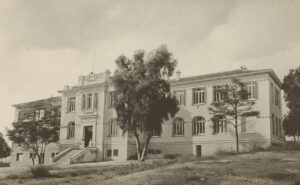
The Cancer Institute, or “Instituto Príncipe de Asturias”, was the first center in Spain devoted to cancer treatment and research. This article analyzes the development of the institution from the laying of its first stone in Madrid’s Moncloa district in 1910 until its complete destruction during the Spanish Civil War. In what were likely the most turbulent years in the country’s history, a collective effort was required, involving not only physicians and scientists but also state institutions, the monarchy, and philanthropic organisations such as the Spanish League Against Cancer.The need to establish a dedicated cancer hospital arose from growing professional and public interest, as well as the increase in cancer incidence.
Additionally, long hospital stays and a lack of specialized centers in Spain made it very difficult to provide adequate care for these patients. The process was complex and marked by recurring economic challenges, affecting both the construction and operation of the Institute. Its foundation took place in the context of national healthcare reforms spurred by campaigns against serious diseases—mirroring European models. Funding depended on state support, private donations, and public grants, but resources were never sufficient to meet the rising demand from patients.
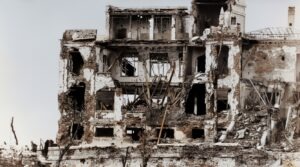
During the period studied, figures such as José Goyanes and Pío del Río-Hortega led the Institute at various times and promoted histopathological and radiotherapy research. The outbreak of the Civil War had devastating consequences: the building was destroyed, and part of the staff, including del Río-Hortega, went into exile, representing a considerable loss for Spanish medical science.
Resumen
El Instituto del Cáncer o Instituto Príncipe de Asturias fue el primer centro especializado en el tratamiento e investigación del cáncer en España. En este artículo se analiza la evolución de dicho centro, desde la puesta de la primera piedra en los terrenos de la Moncloa de Madrid, en 1910, hasta su destrucción total durante la Guerra Civil española. Durante los que probablemente fueron los años más convulsos de la historia del país, hubo que hacer un esfuerzo colectivo para abordar los desafíos de la enfermedad, que implicó no solo a médicos y científicos, sino también a las instituciones estatales, a la monarquía y a organizaciones filantrópicas como la Liga Española Contra el Cáncer.
La necesidad de crear un hospital monográfico especializado en cáncer surgió debido al interés que despertaba, tanto en los profesionales, como en la población general, el aumento de la incidencia del cáncer. Por otro lado, las prolongadas hospitalizaciones de este tipo de pacientes y la falta de centros especializados en el país, hacían que fuera muy difícil encontrar una solución para poder prestarles asistencia. El proceso fue complejo, y estuvo influido por dificultades económicas recurrentes, que afectaron tanto la construcción como el funcionamiento del Instituto. La fundación del Instituto se enmarca en un contexto de reformas sanitarias nacionales impulsadas por campañas contra enfermedades graves, siguiendo modelos europeos. La financiación provenía de apoyos estatales, donaciones privadas y subvenciones de organismos públicos, pero nunca fue suficiente para cubrir el creciente número de pacientes.
Durante el periodo analizado, figuras como José Goyanes y Pío del Río-Hortega lideraron el Instituto en distintos momentos e impulsaron la investigación histopatológica y de radioterapia. El estallido de la Guerra Civil tuvo consecuencias devastadoras; el edificio fue destruido y parte del personal, como del Río-Hortega, se exilió, marcando una pérdida significativa para la ciencia médica española.
Keywords
National Cancer Institute; Principe de Asturias Institute; fighting cancer in Spain; radiotherapy; Spanish Civil War
Palabras clave
Instituto del Cáncer; Instituto Príncipe de Asturias; lucha contra el cáncer en España; radioterapia; Guerra Civil española